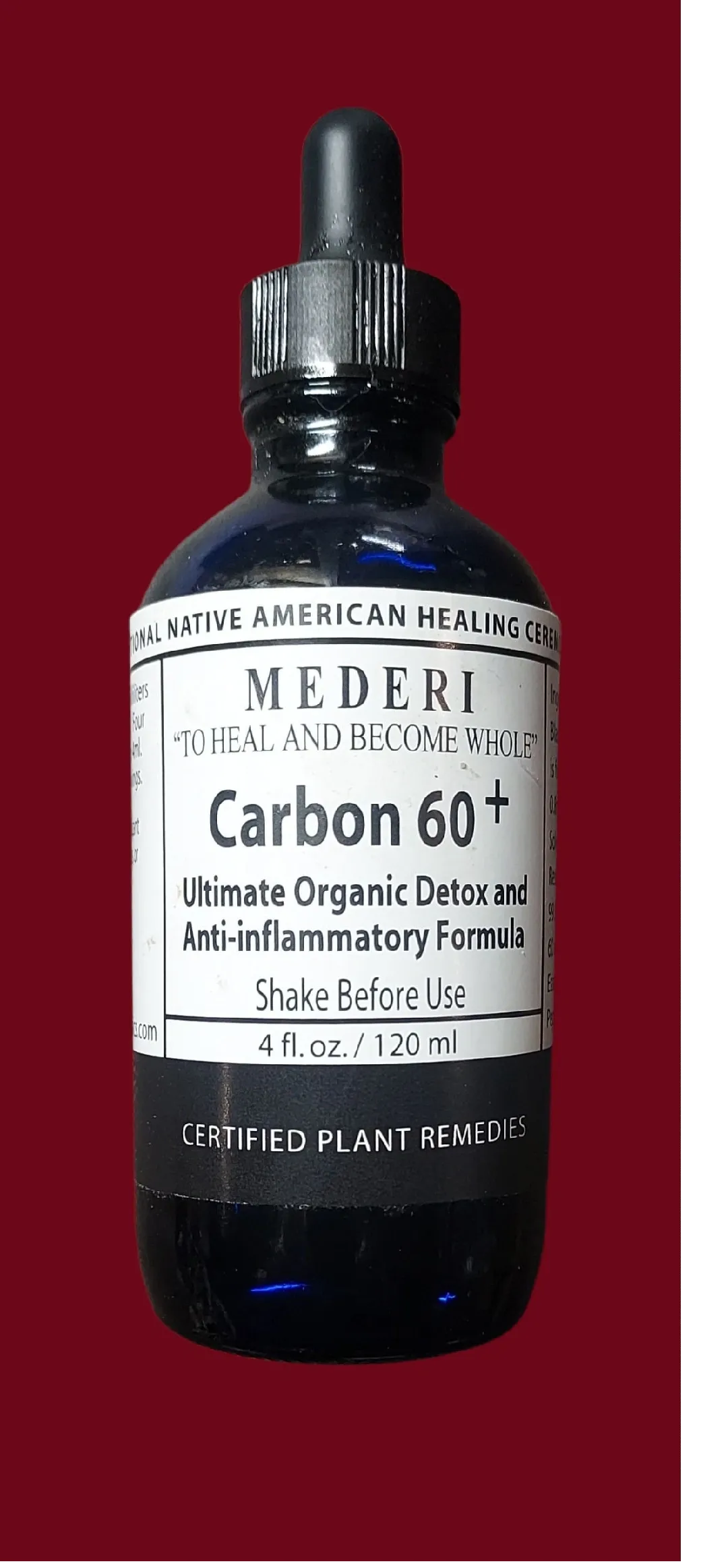
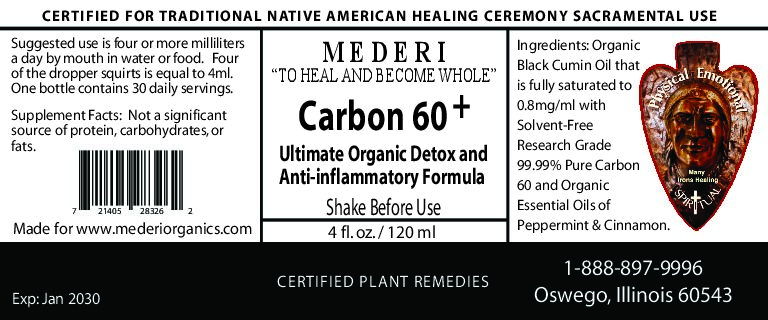
Carbon 60 +
$80.00
Ingredients
Bioactive soluble carbon nano-structure, Natural universal anti-oxidant, Super oxides.
30-Day Money-Back Guarantee
Description
C60 the Miracle Molecule
The molecule C60 was found in 1985. Over the years scientists have invested a lot of energy exploring C60 and its unique properties and potential applications. Animal research studies in France has demonstrated that this exceptional oil-soluble particle can actually increase life expectancy.
Properties of C60:
Molecules of C60 are superconducting and can absorb nearby toxins. The C60’s bioactive soluble carbon nano-structure is a natural universal anti-oxidant, thousands of times more effective than vitamin C, that can accept or donate several electrons depending on the need. C60 molecules also remove the super oxides which are a toxic by-product produced during the cellular metabolism.
Health Benefits:
With its longevity enhancing properties, the health benefits of C60 are phenomenal. In our modern world, harmful free radicals are plentiful in our polluted air, water, and food. The miraculous C60 molecule not only has ability protect the body against these dangerous free radicals but to remove those free radicals permanently from the body.
Studies have shown that C60 contains anti-inflammatory properties that is useful in treating diseases like arthritis. It has also been discovered that molecules of C60 contains the properties to kill certain insect carrying iridoviruses and harmful bacteria like streptococcus.
Other potential beneficial properties of C60 molecule has shown the following:
- Protects and prevents your nerves from damaging and death.
- Prevents infections.
- Skin protection.
- Lowers blood pressure.
- Inhibits the growth of fat cells and reduces excessive body fat.
- Lowers cholesterol.
- Normalizes blood sugar.
- Reduces muscle fatigue.
- Blood purifier.
- Antimicrobial properties.
- Prevents osteoarthritis and the associated breakdown of cartilage.
Many peer reviewed studies on specific ingredients, as well as medical mushrooms can be found at National Institutes of Health (NIH) Click here → (pubmed.ncbi.nlm.nih.gov)


Reviews
There are no reviews yet.